
For MedTech startups, speed is everything. Investors expect traction. Founders want to see their ideas come to life. And patients, ultimately, can’t wait. And amid the rush to develop and deliver, design controls can feel like an obstacle: a set of regulatory hoops to jump through on the way to FDA clearance.
That perception is not only outdated, it’s risky. When approached strategically, design controls can actually help you build safer, better products faster. In this post, we’ll explore how startups can integrate compliance into their development process without slowing down innovation, and why doing so gives you a long-term advantage.
What Are Design Controls and Why Do They Matter?
Design controls are a regulatory requirement, but they’re also much more than that. At their core, design controls are a structured approach to product development.
They are an often-iterative series of steps that ensure medical devices are safe, effective, and meet the needs of end users. For startups trying to move fast and break new ground, understanding these controls can be the difference between costly delays and confident progress.
Data from the FDA also show that many issues experienced with medical devices come from poor Design Control management, and that is why regulators are putting a lot of emphasis on this area during submission review and audits:
- The most frequent causes for recalls are related to Design, Software, and Non-Conforming Materials/Components
- 44% of voluntary recalls from October 1983 through September 1989 may have been prevented by adequate design controls
A Quick Primer on FDA & EU MDR Design Control Requirements
The FDA’s Quality Management System Regulation (QMSR) and the EU Medical Device Regulation (MDR) include sections that outline the expectations for how medical devices shall be developed and tested, to demonstrate that they are safe and effective for their intended use. These regulations are referred to as “Design Controls”.
These regulations apply to most devices, but there are slight differences between the US and the EU:
- FDA QMSR: Design controls are mandatory for all Class II and Class III devices, but most Class I devices are exempt.
- EU MDR: Design controls are mandatory for all classes (I, IIa, IIb, III) as part of the Quality Management System (QMS) requirements in Article 10.
Both FDA QMSR and the EU MDR are leveraging the international standard ISO 13485:2016, Medical devices – Quality management systems – Requirements for regulatory purposes, as the foundation for Design Controls. More specifically, Clauses 7.1 and 7.3 of the ISO 13485:2016 standard are the ones outlining the requirements for Design Control:
- ISO 13485 Clause 7.1, “Planning of Product Realization,” requires organizations to establish a documented, risk-based approach for the entire product lifecycle, from conception through, design, production, and delivery
- ISO 13485 Clause 7.3 defines the mandatory requirements for Design and Development. It ensures that medical devices are systematically created, verified, and validated to meet user needs and regulatory safety
These clauses mandate a systematic approach to managing the planning and design & development process, including design documentation, product build documentation, product testing, design changes, design reviews, and traceability.
Key Components of Design Controls
Here’s a breakdown of the core elements related to design and development of medical devices within ISO 13485:2016:
- Design and Development Planning
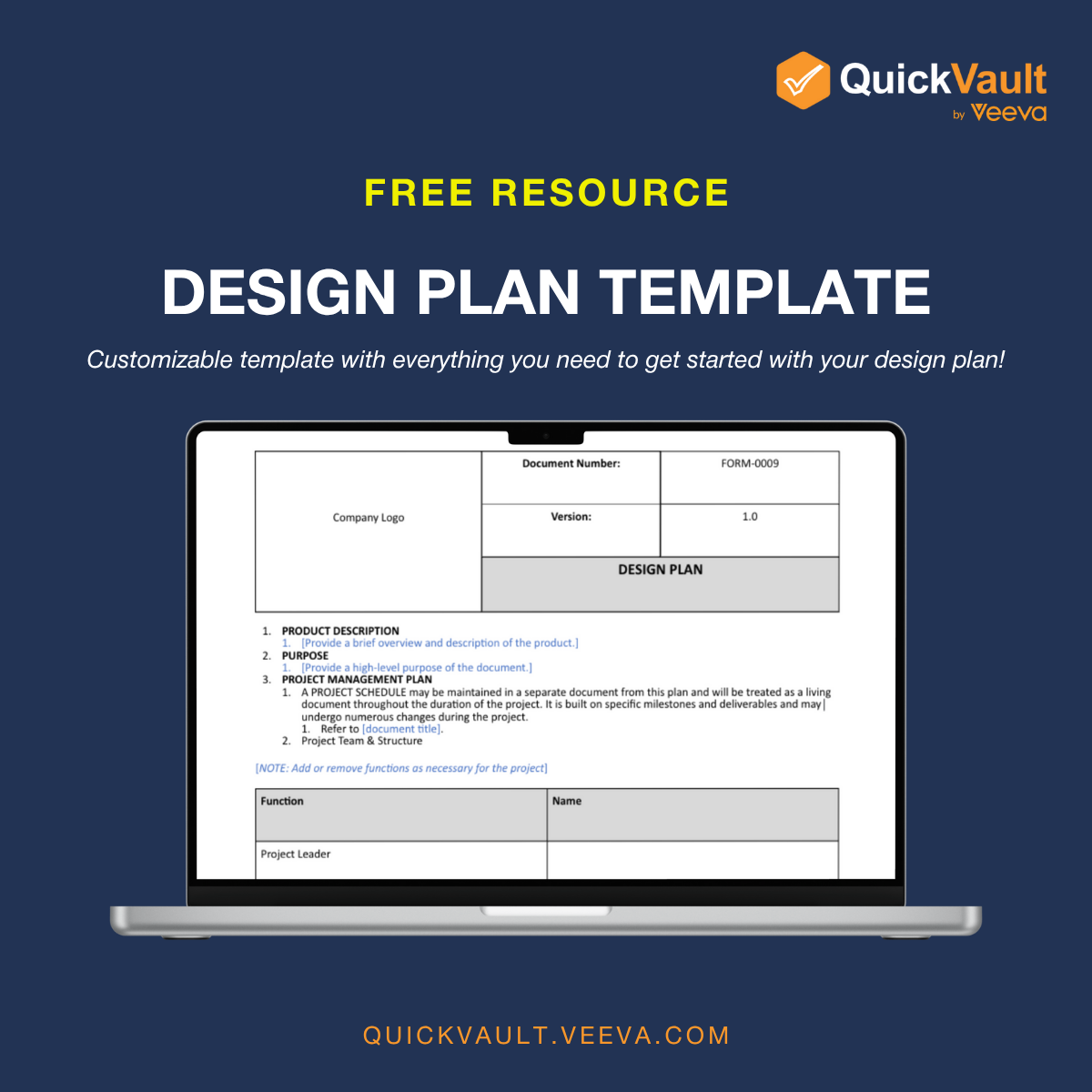
The bedrock of the development effort, the design & development (D&D) plan outlines the goals of the project, delineates responsibilities, and identifies the major tasks, deliverables, milestones, and timelines. It also specifies what documentation will be generated and who is responsible for reviewing it. - Design Inputs
The product’s starting point: design inputs specify what the device must do. These are derived from user needs, intended use, regulatory requirements, and applicable standards. These inputs form the foundation for development tasks as well as subsequent verification and validation activities. - Design Outputs
The tangible results of the design effort, specifications, drawings, software code, Bill of Materials, manufacturing & test instructions etc. that defines the design of the device and are in line with the design inputs (requirements). - Design Verification
Confirmation that outputs meet the inputs. This answers the question: Did we build the device right? Verification testing may include bench tests to measure various attributes of the design, such as size, performance, mechanical strength etc. - Design Validation
Ensures the device meets user needs in the real world, addressing the question: Did we build the right device? Validation testing may include simulated actual use, animal studies, clinical testing etc. to ensure the device works as intended under simulated or actual conditions. - Design Reviews
Formal cross-functional project meetings during development where teams evaluate progress, identify issues, and document decisions. - Design Transfer
The formal transition from the product development team to manufacturing operations, ensure the device can be manufactured consistently according to the design. - Design Changes
A process for controlling and documenting changes to the product design during development, and for any post-commercial changes. Change control is governed by ISO 13485:2016 Clause 4.2.4 (Control of Documents) and Clause 7.3.9, Control of Design and Development Changes. - The Design and Development File
The ISO 13485:2016 Design and Development File (Clause 7.3.10) is a required, maintained record demonstrating that a medical device was developed according to plan and regulatory requirements. It contains or references documentation for design planning, inputs, outputs, reviews, verification, validation, transfer, and changes. - The Medical Device File
The Medical Device File (MDF) in ISO 13485:2016 Clause 4.2.3, must be established for each device type or family to demonstrate compliance with regulatory and quality requirements. It acts as a central repository for the device’s lifecycle documentation, including its description, intended use, drawings, specifications, labeling, manufacturing/service procedures, etc. - Risk Management (per ISO 14971)
Risk Management is a foundational piece of design and development of medical devices, and emphasized throughout ISO 13485, including Clause 7.1.The FDA and EU MDR are both leaning on the international standard for risk management for medical devices, ISO 14971.
- Design and Development Planning
Why Startups Can’t Afford to Overlook Design Controls (But Timing Matters)
For many MedTech startups, the instinct is to postpone formal design controls. And that instinct isn’t wrong, at least not entirely. That doesn’t mean design controls aren’t important, it only means that design controls should be introduced at the right moment.
In the earliest phases, teams need to move fast: testing ideas, demonstrating core functionality, and gathering user input. Applying rigid documentation requirements too soon can lead to wasted effort and unnecessary revisions as the concept evolves.
The FDA is recommending the following about when to apply design controls:
Recommended timing:
- When research is ending
- After Feasibility/“Proof of Concept” (at Design Freeze)
Required (latest time):
- Prior to the start of a clinical evaluation such as an Investigation Device Exemption (21 CFR 812)
- Prior to submitting to FDA, a 510(k), De Novo, Premarket Approval (PMA) or Humanitarian Device Exemption (HDE). NOTE: this list is not all inclusive.
By focusing on architectural planning and risk awareness, startups can maintain speed without losing sight of quality. Once the concept works and key requirements are validated, formal design controls become a powerful accelerator.
That’s when structured documentation and traceability help teams:
- Accelerate Development
Done well, design controls streamline, not slow, your path to market. When teams align on requirements, risks, and test plans early, they reduce rework, avoid surprises, and move faster. - Avoid Regulatory Delays
Whether it’s an FDA submission or ISO 13485 certification, auditors will ask to see a well-structured design history. And you can’t build that overnight. - Ensure Safety and Efficacy
Mistakes in design can have life-threatening consequences. Formal controls reduce the risk of design flaws going undetected. - Enable Lifecycle Traceability
Clear links between risks, requirements, design features, and testing outcomes are critical. You must be able to show that a risk was identified, mitigated with a design feature, and verified as effective.
- Accelerate Development
The key isn’t doing everything up front; it’s doing the right things at the right time.
Want to dive deeper into how early-stage MedTech teams can scale faster without sacrificing compliance? Watch the free webinar from Nocturnal and QuickVault, Scaling from Prototype to Commercial Success: A Lean Approach for MedTech Startups, to learn practical strategies for applying the right level of design controls at the right time, and how the right tools and planning can help turn compliance into a competitive advantage.
Turning Compliance into Acceleration
The truth is, design controls aren’t just about compliance; they are rooted in sound project management principles. When baked into the development process from the outset, they help product teams:
- Catch issues earlier: Design reviews surface risks before they become expensive problems.
- Stay aligned: Clear inputs and outputs ensure your team stays focused on solving the right problems.
- Reduce iteration cycles: Verification and validation prevent endless prototyping and guesswork.
Done right, compliance doesn’t slow you down, it keeps you moving in the right direction.
Tools and Tactics for Streamlining Design Controls
Startups today have a major advantage: modern tools built specifically for them. Solutions like QuickVault by Veeva offer out-of-the-box eQMS functionality tailored to the needs of growing MedTech companies. Here are some of the key benefits they provide:
- Pre-built templates for design control documentation
- Automated traceability between inputs, outputs, risks, and testing
- Collaborative workflows for design reviews, training, and quality events
- Regulatory readiness with built-in submission management, audit trails and change control
Instead of wrangling spreadsheets and scattered folders, your team can work in a unified system that supports both innovation and compliance.
How the Right Partners and Tools Drive Faster Time-to-Market
The most successful MedTech teams build quality into their process from the beginning. They treat design controls not as a burden, but as a way to clarify thinking, reduce risk, and increase their startup’s valuation.
They understand design controls aren’t in the way…they are the way. When implemented thoughtfully, this approach can help startups avoid common pitfalls as well as accelerate regulatory readiness and time to market.
Strategic partners like Nocturnal help early-stage teams strike this balance, bringing deep regulatory expertise and a phase-based approach that reduces risk while keeping momentum.
Paired with tools like QuickVault, which provides purpose-built eQMS functionality for managing design controls, risks, and traceability in one system, startups can move fast with confidence, turning compliance into a true accelerator.